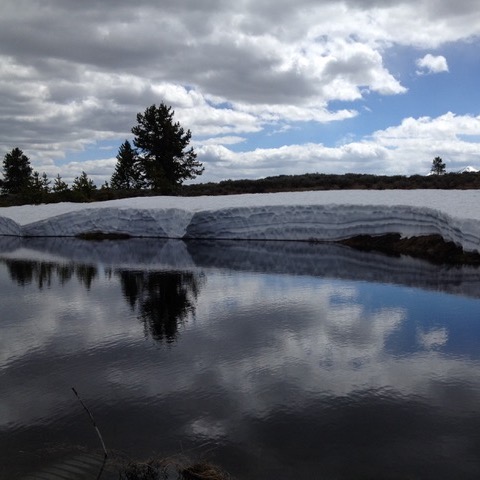
March is a quiet month in Yellowstone, not because there’s nothing happening but because all but one road is closed and there is little human hubbub. April … that’s a different story. Still, these are two months during which I have not seen the park. What I know I’ve learned from others who know and love it well. Here’s what’s new and notable in March.
Notable
- First Grizzly Sighting: While there’s always the occasional bear that comes out of its den and wanders around during deep winter, it isn’t until March that bears emerge for the season. March 9 was the first official sighting. It was a male, feeding on a bison carcass. Males typically come out of their dens in March, while females (and their cubs) don’t emerge until April or even May. (Of course, after I wrote this section, I learned from an area guide that a female grizzly and her two yearling cubs were seen in the Grand Teton area on March 29. He’s been guiding in the Greater Yellowstone Ecosystem, of which the Tetons are part, for years and had never before seen a female out this early.)
- An Open Road: Everyone from the Yellowstone area that my husband or I have interacted with has had one observation to make about this past winter: It was warm. Weirdly so. One man (a winter keeper who has been shoveling snow off park building roofs for decades) told Jaime that he’s seen winters with low snowfall, but he’s never before experienced one that could be called warm. What this means is that some things are running about 3 weeks ahead of the usual timeframe–including snow melt and the opening of the road between West Yellowstone and Mammoth Hot Springs for spring biking.
Worth Noticing
- Watch for mountain bluebirds. For locals, they are seen as a sign that winter will pass and that spring is on the way.
- Watch for ravens. Ravens are intelligent birds, and scientific studies have confirmed what observers have noticed: Ravens frequently arrive at carcasses before wolves. While some people believe this is an element of a symbiotic relationship in which ravens purposefully lead the wolves to carcasses, others believe that the wolves follow the ravens. Either way, if you see a concentration of ravens in an area, you may also see wolves.
- If you would enjoy occasional observations and reflections from Yellowstone, find Field Notes here.
- For information about visiting Yellowstone during the winter, the national park website is a great place to begin. Look here for information regarding in-park lodging
