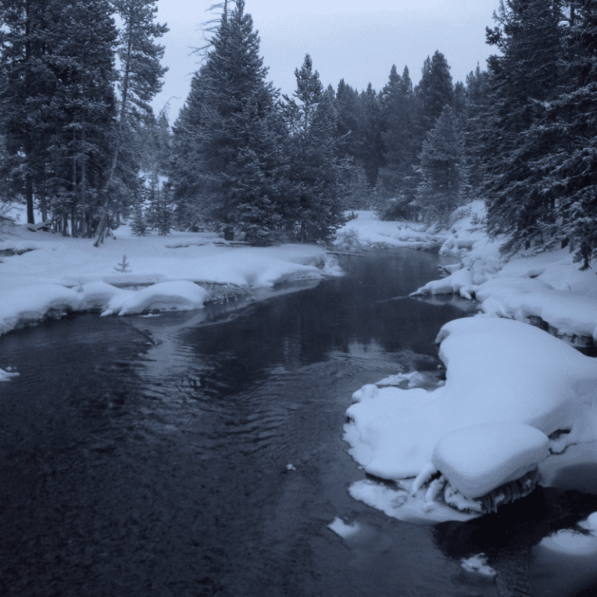
I’ve visited Yellowstone in January and February, and found it to be both a delightful wonderland and a frigid, forbidding, unforgiving landscape. We snowmobiled when my parents, brother, and I visited in my teens. Even bundled in the best snowmobile attire the 1980s had to offer, two days at 40 miles an hour in well-below-zero temperatures was enough to cause us to trade our keys and spend the final day circled around a Monopoly board. So you know. Even so, it’s an experience I one hundred percent recommend and would repeat.
What’s Happening in Yellowstone This Winter
- A grizzly was observed wandering around in the Specimen Ridge area (in the north end of the park). This mid-winter sighting is apparently one of the earliest on record.
- Despite receiving solid snowfall in early November, the snowpack is currently low.
- Why this matters: Winter’s snowfall becomes spring snowmelt and summer moisture.
- While this may have changed, last I heard, snowmobile tours are not happening because of insufficient snow on the roads.
- Low visitation numbers.
- January 2024 received 42, 740 of the year’s 4.7 visitors
- This is simply because it is winter, not due to the low snowpack.
- In the absence of people and automobiles, wildlife (particularly bison) make themselves at home on park roads, parking lots, and even lodge porches.
What You’ll Notice
- Profound silence.
- Extreme cold. While the average highs and lows (mid 20s and just above 0° F) don’t seem too out of the norm, the extremes are, well, extreme.
- Less wildlife. Many large mammals have moved to their winter grounds, and many birds have migrated south. Still, you are likely to see:
- Eagles soaring in clear blue skies, and occasionally diving for a catch from a river
- Bison wading through shoulder-deep snow, using their massive heads as shovels as they search for buried grass
- Wolves, especially on the road between Mammoth and Silver Gate
- If you would enjoy occasional observations and reflections from Yellowstone, find Field Notes here.
- For information about visiting Yellowstone during the winter, the national park website is a great place to begin. Look here for information regarding in-park lodging.
